
Can Goats Eat Grapes

If you’ve ever spent time around goats, you know they’ll happily nibble on just about anything within reach, including your fruit basket.
Grapes, with their sweet flavor and juicy texture, often tempt goat owners to share a handful as a treat.
But before tossing those grapes into the pen, it’s important to ask: Can goats eat grapes safely?
Understanding what goats can and can’t eat plays a big role in maintaining a healthy herd.
In this blog, we’ll explore the nutritional value of grapes, their potential risks, how to feed them properly, and healthier alternatives you can offer.
Are Grapes Safe For Goats To Eat
Yes, goats can eat grapes, but moderation is key. Grapes are not toxic to goats like they are to some other animals (such as dogs). When offered occasionally and in small amounts, they can be a safe and tasty treat.
Grapes provide variety in a goat’s diet, which can make feeding time more enjoyable.
However, it’s important to remember that grapes should never replace a balanced diet of hay, forage, and goat feed. Think of them as a special snack, not a main course.
Nutritional Value Of Grapes For Goats
Grapes may seem like a simple snack, but they actually contain several nutrients that can benefit goats when fed in moderation.
Understanding the nutritional value of grapes for goats helps you make informed decisions about how to include them safely in their diet.
Natural sugars for quick energyGrapes are naturally sweet and rich in simple sugars. When offered occasionally, these sugars can provide goats with a quick boost of energy.
This can be particularly helpful for active goats, lactating does, or during colder seasons when extra calories support their metabolism and keep them warm.
Rich in vitamins and mineralsGrapes contain vitamin C, potassium, and antioxidants, all of which play a role in supporting goat health and immunity.
Vitamin C aids in tissue repair and immune defense, while potassium helps regulate muscle and nerve function.
Antioxidants contribute to overall well-being by fighting harmful free radicals in the body.
Hydration supportWith their naturally high water content, grapes can offer a light source of hydration, especially during hot weather.
While they shouldn’t replace fresh, clean water, this added moisture can help keep goats comfortable and hydrated during warmer months.

While these nutrients offer benefits, it’s essential to remember that grapes are high in sugar.
Feeding too many at once can upset the balance of the rumen, the goat’s sensitive digestive system, and lead to bloating or diarrhea.
For this reason, grapes should always be treated as an occasional treat, not a dietary staple.
Potential Risks Of Feeding Grapes To Goats
While grapes can be safe, there are some important risks of feeding grapes to goats you should understand:
Digestive issues - Goats have sensitive rumens. Feeding too many grapes at once can cause bloating, diarrhea, or other digestive problems.
Choking hazard - Whole grapes can be slippery and may pose a choking risk, especially for smaller or younger goats.
Unbalanced diet - Relying on grapes or other fruits too often can lead to nutritional imbalances, as they lack the fiber and protein goats need daily.
The key is moderation. Occasional grapes are fine, but daily large quantities are not.
How To Feed Grapes To Goats Properly
Feeding grapes to goats can be a fun and nutritious treat, but how you offer them matters just as much as how many you give.
Goats have sensitive rumens, so introducing new foods like grapes should always be done with care.
Follow these practical steps to ensure grapes are a safe and enjoyable addition to your goats’ diet:
Cut grapes into smaller pieces
While adult goats can usually chew grapes without issue, it’s safer to cut them in half, especially for kids (young goats) or smaller breeds.
This reduces the risk of choking and makes the grapes easier to digest. For baby goats, you can even quarter the grapes to make them more manageable.
Offer grapes in controlled portions
Grapes should be viewed as a treat, not a main feed. Start by giving each goat just a few grapes and observe their reaction.
If they tolerate the fruit well with no signs of bloating or diarrhea, you can continue to offer them occasionally. Overfeeding can disrupt the balance of their rumen, so moderation is key.
Feed by hand or scatter them to encourage foraging
One great way to make treat time more engaging is to hand-feed grapes or scatter a few around their feeding area. This mimics natural foraging behavior and keeps your goats mentally stimulated while they enjoy their snack.
Avoid dumping large amounts into the trough
While it might be tempting to toss in a bunch of grapes, sudden large quantities can overwhelm the digestive system and lead to goat bloating or digestive upset. Stick to small, carefully measured portions to protect their rumen health.
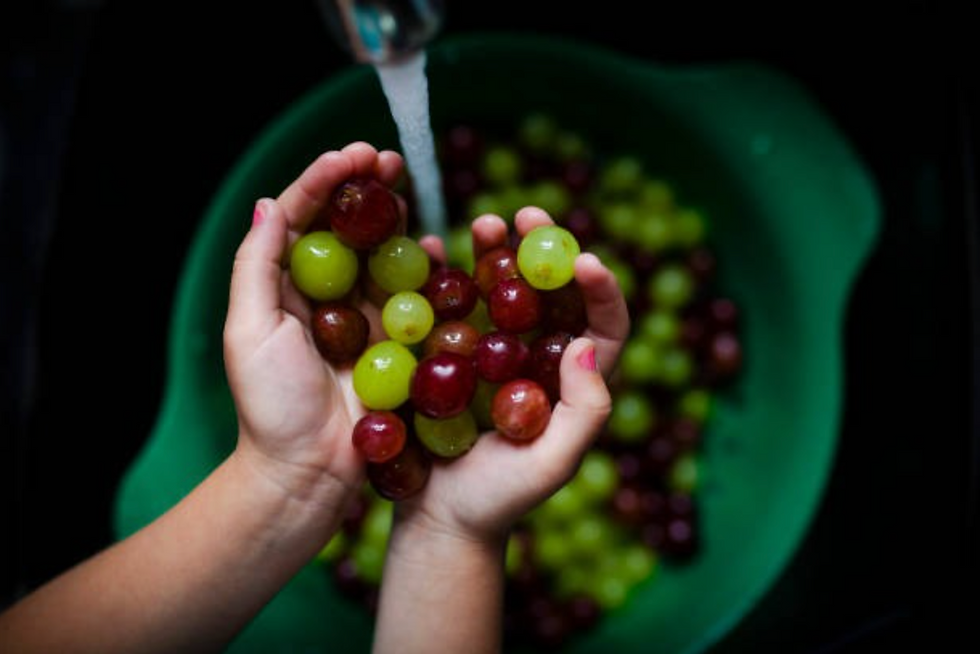
Wash the grapes thoroughly
Before offering grapes, make sure to rinse them well under clean running water to remove any dirt, pesticides, or chemical residues, especially if the grapes are not organic.
Goats are sensitive to harmful substances, and even small amounts of chemical residue can upset their digestive systems over time.
Can Goats Eat Grape Leaves, Vines, or Seeds
Yes, goats can eat grape leaves and vines, and they often enjoy them. The leaves provide roughage, which supports healthy digestion. Just make sure the vines are free from pesticides or chemical sprays.
As for grape seeds, most goats can handle them without problems, since their digestive systems are equipped to process seeds.
However, for very young goats or if the grapes have large seeds, it’s safer to choose seedless varieties or remove the seeds first to avoid choking.
What To Do If A Goat Eats Too Many Grapes
If a goat manages to sneak into your grape stash and eats more than it should, don’t panic, but keep a close eye on them. Watch for signs of:
Bloating or a distended belly
Lethargy
Diarrhea
Loss of appetite
If any of these symptoms appear, contact your veterinarian right away. Early intervention can prevent more serious complications like acidosis or severe bloat.
Offering plenty of hay and water can help balance their rumen while you monitor their condition.
Alternatives To Grapes As Goat Treats
While grapes are fine in small amounts, it’s smart to rotate treats to keep your herd healthy and happy. Healthy treat alternatives for goats include:
Apple slices (without seeds)
Carrots cut into small pieces
Banana peels and chunks in moderation
Pumpkin or squash (raw or cooked)
Tree leaves and safe browse, which mimic their natural diet

These options provide variety, fiber, and nutrients without the high sugar levels found in grapes.
The Bottom Line
So, can goats eat grapes? Absolutely, when fed in moderation and prepared properly. Grapes can be a fun, occasional treat that adds variety to your goats’ diet.
However, understanding their nutritional value, potential risks, and how to feed them safely is key to maintaining a healthy goat herd.
By keeping treats balanced and focusing on their core diet, you’ll ensure your goats thrive while still enjoying the occasional juicy snack. For more insights and real-life examples from experienced dairy goat owners, check out Hickory Leaf Dairy Goats.


Comments