
Goats And Emotional Contagion
Updated: Jul 20

Have you ever walked into a space feeling stressed and somehow the whole mood around you feels different too? Now imagine that happening in a herd of goats.
Not just a coincidence, science suggests goats may experience something called emotional contagion, meaning they can “catch” emotions from others around them. And yes, that might include your vibes too.
Let’s break it down in a fun, simple way.
What Is Emotional Contagion
Emotional contagion is basically the idea that emotions can be “passed on” from one being to another like an emotional ripple effect. If one goat is stressed, excited, or calm, other goats around it may begin to reflect that same emotional state without anyone saying a word.
It’s not mind-reading. It’s more like emotional “copy-paste.” And this isn’t just theory, research shows goats are highly sensitive social animals that respond to emotional cues in each other.
Goats Don’t Just Hear You They Feel The Mood
Goats are far more socially aware than most people expect. Beyond simple reactions to sound, they are deeply tuned into emotional cues expressed through vocalizations, body language, and group behavior.
Scientific studies have shown that goats can actually distinguish between positive and negative emotional tones in other goats’ calls, responding differently depending on the emotional context they hear.
In simple terms, a happy bleat does not land the same way as a distressed one, goats seem to pick up on the meaning behind the sound, not just the sound itself.
What makes this even more fascinating is how quickly these emotional signals influence the herd.
When one goat expresses calmness or contentment, the surrounding goats often remain relaxed and continue their normal activity. But when a goat signals frustration, fear, or distress, the energy shifts almost instantly.
The herd becomes more alert, more cautious, and more synchronized in their response. It’s not chaos, it’s coordination. In many ways, goats are constantly “reading the room,” even when the room is a pasture full of hay and open space.

Herd Life, Why Emotions Spread So Fast
To understand goats properly, you have to understand that they are not solitary thinkers, they are deeply social animals that rely on the herd for survival, safety, and structure.
In a goat group, awareness is everything. Each member contributes to the overall sense of security, and every reaction matters. Because of this, emotional responses don’t stay isolated. They travel quickly from one individual to the rest of the group.
If one goat becomes anxious, that emotional state can ripple through the herd in seconds. Others may lift their heads, stop feeding, or reposition themselves closer together.
This isn’t random behavior, it is a survival strategy. In the wild, reacting quickly to the emotions of others can mean the difference between safety and danger. Over time, this has shaped goats into highly responsive animals that naturally mirror the emotional tone of their group.
It’s almost like a natural communication network, except instead of messages or words, goats are sharing feelings. A calm herd stays calm together. A nervous herd becomes alert together. In essence, their emotional world is collective rather than individual.
Can Goats Feel YOUR Vibes Too
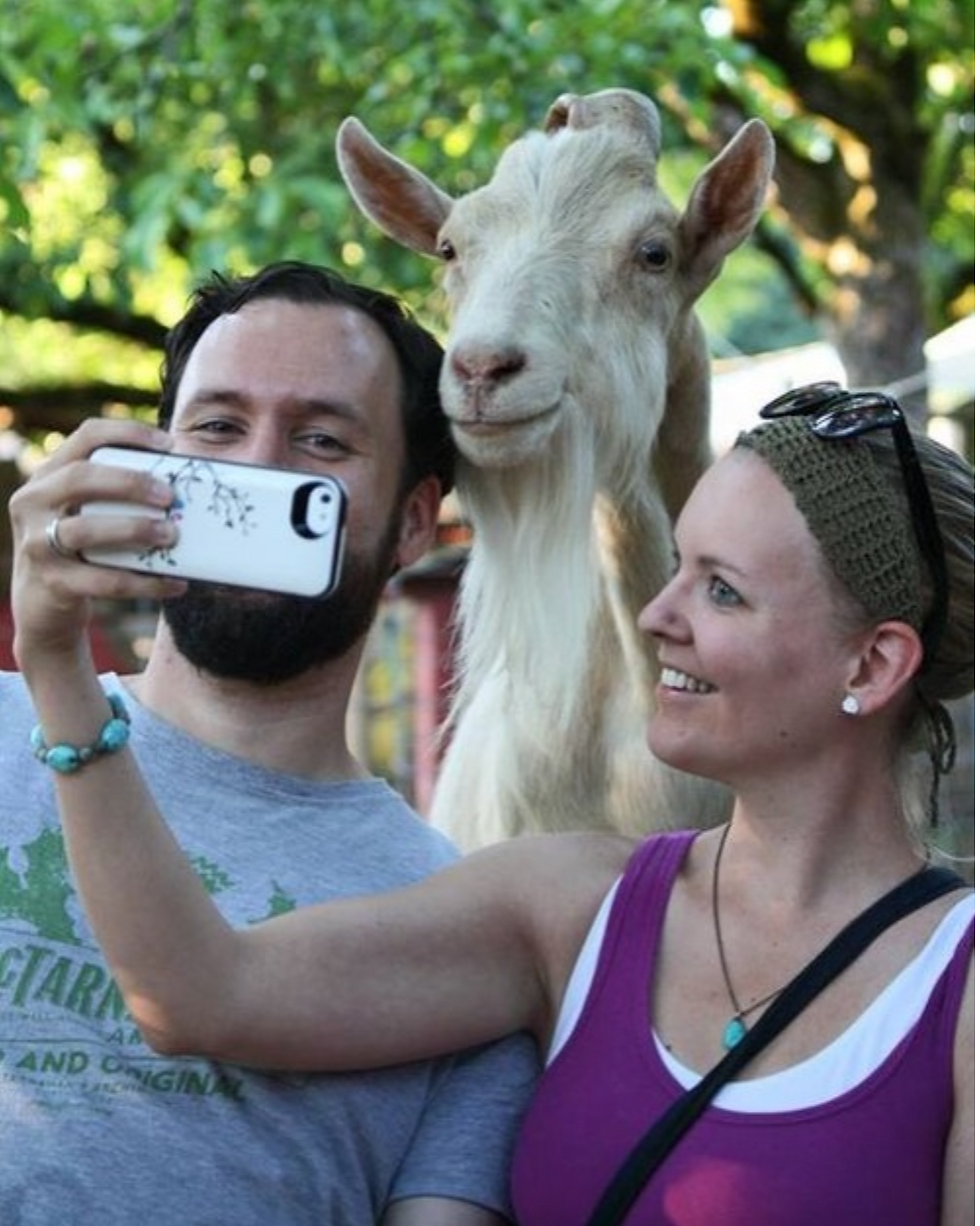
Here’s where things become even more interesting. Goats don’t only respond to each other, they also respond to humans. Research suggests that goats are capable of recognizing human emotional expressions and are more likely to engage positively with calm, friendly, or relaxed human behavior.
This means that when you interact with goats, your emotional state is not as invisible as you might think. In practical terms, goats often behave differently depending on how a person approaches them.
A calm and steady presence tends to make goats more curious, open, and willing to interact. On the other hand, nervous, rushed, or tense energy can make them more cautious or hesitant. They may keep their distance or observe more carefully before deciding whether to approach.
Importantly, this doesn’t mean goats are judging people in a human sense. Instead, they are simply responding to patterns they recognize the tone of movement, posture, voice, and emotional energy. Over time, these subtle cues become part of how goats decide whether a situation feels safe or uncertain. In their world, emotions are part of the environment, not just something inside individuals.
Why Goats Are So Emotionally Sensitive
Goats are naturally built to be highly observant animals. Living in herds requires constant awareness, quick interpretation of signals, and fast decision-making.
Their survival depends on noticing changes in their environment, whether that change is a sudden movement, a warning call, or a shift in group behavior.
This sensitivity is reinforced by several key traits.
Goats rely heavily on vocal communication, using a variety of sounds to express needs, stress, curiosity, or comfort. They also learn by watching others closely, often copying behavior or responding to group cues. Because they live in dynamic environments where conditions can change quickly, they have developed a strong instinct to stay alert and emotionally responsive.
As a result, goats often appear curious, expressive, and sometimes even “dramatic” in their reactions. But what looks like drama is actually a finely tuned awareness system at work, one that helps them stay connected to their herd and their surroundings.
What This Teaches Us About Animals (and Us)
The idea of emotional contagion in goats reveals something powerful about animal life: emotions are not always private experiences. In social species like goats, emotions often move between individuals, shaping group behavior and shared responses.
This challenges the idea that animals simply react mechanically to the world. Instead, it suggests that their emotional lives are interconnected and responsive.
Goats, in particular, show us that emotional awareness is not limited to humans. Their ability to respond to both herd members and humans highlights how deeply social intelligence can develop in animals that depend on cooperation and awareness for survival.
It also reminds us that behavior is rarely just physical, it is often emotional, relational, and deeply contextual.For anyone who spends time around goats, one thing becomes clear very quickly: your presence matters. Not just what you do, but how you feel while doing it.

Key Takeaways
The next time you stand near a herd of goats, remember this simple idea, they may not understand your thoughts, but they are constantly interpreting your energy.
Every movement, every tone, every subtle shift in behavior becomes part of the message they receive. So perhaps the real takeaway is surprisingly simple, Stay calm. Move gently. And never underestimate how much your “vibe” becomes part of the world around you.


Comments