
Heating Goat Shelters In Winter. Essential Strategies For Keeping Your Goats Warm And Comfortable

The first truly cold night of the season has a way of changing everything. The air sharpens, the ground stiffens, and suddenly, your focus shifts from everyday care to one important question: Are your goats warm enough?
If you’ve ever stepped outside on a freezing morning and seen your goats huddled together, you already understand how important proper winter care is. But here’s something many new owners don’t realise, keeping goats warm in winter isn’t just about adding heat. In fact, too much artificial heat can sometimes do more harm than good. What goats really need is a smart, well-prepared environment that protects them from cold stress while allowing them to stay naturally resilient.
In this guide, we’ll walk through exactly how to approach heating goat shelters in winter, along with practical, safe, and effective strategies that keep your goats comfortable through even the coldest months.
Do Goats Really Need Heat In Winter
This is one of the most common questions in winter care for goats, and the answer isn’t as straightforward as many expect.
Goats are naturally built to handle colder weather. As temperatures drop, they develop thicker coats that help trap body heat and protect them from the chill. When combined with a dry, sheltered space and proper nutrition, most healthy adult goats can remain comfortable without any added heat, even in fairly cold conditions.
However, not all goats handle winter the same way. Newborn kids, for example, can’t yet regulate their body temperature effectively, making them more vulnerable to cold stress. Older goats may also struggle, especially if they have underlying health issues or reduced body condition. Similarly, goats that are underweight or recovering from illness may not have the energy reserves needed to stay warm.
In these situations, additional warmth can make a real difference. But it’s important to see heating as a supportive measure, not the main solution. A well-prepared shelter, proper feeding, and dry conditions often do most of the work. Heat should simply fill the gap when natural protection isn’t enough, ensuring your goats remain safe without disrupting their natural ability to adapt to winter conditions.
Start With Shelter Design
Before thinking about adding heat, your focus should always start with goat shelter winter care, because the structure itself plays the biggest role in protecting your goats.
A good shelter acts as a barrier against the harshest elements, especially wind. Cold air moving through a space can quickly strip away body heat, making goats feel significantly colder than the actual temperature. Even a simple shelter can be effective if it blocks wind properly and gives goats a place to rest comfortably.
At the same time, it’s important not to completely seal the shelter. Goats produce moisture through breathing and waste, and without proper airflow, this moisture can build up inside. A damp environment feels colder than a dry one and can lead to respiratory issues over time.
The goal is to create a space that feels calm, dry, and protected. A draft-free goat shelter with gentle airflow allows moisture to escape while keeping cold winds out. When this balance is achieved, goats are able to maintain their body heat much more effectively, often without needing any additional heating at all.
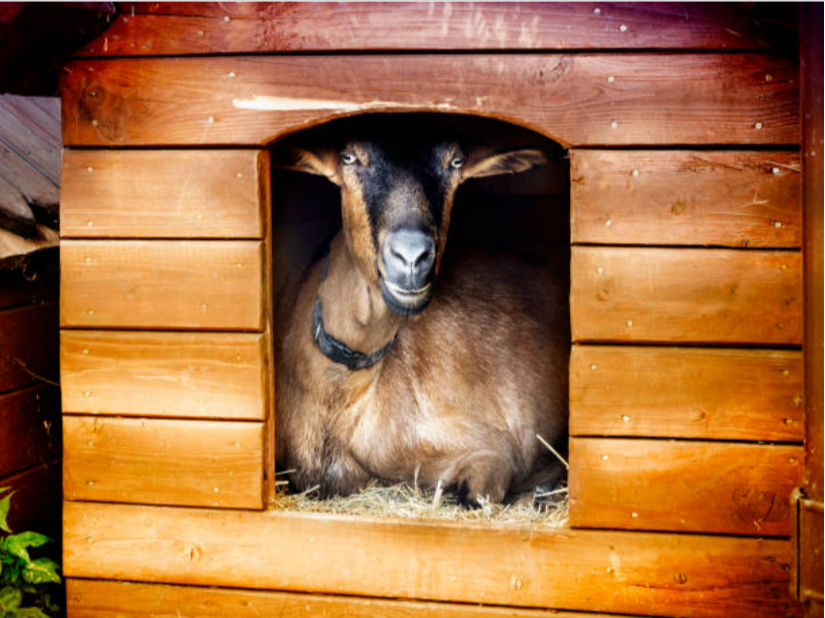
Insulation
Once your shelter is properly positioned and protected, the next step in heating goat shelters in winter is improving insulation.
Insulation doesn’t generate heat, it helps hold onto it. Slowing down the rate at which warmth escapes, it allows the natural heat produced by your goats to remain inside the shelter for longer periods. This creates a more stable and comfortable environment, especially during colder nights.
Simple materials can make a noticeable difference. Wooden walls, tightly stacked straw bales, or even basic insulating boards can reduce the amount of cold air that seeps in. Small improvements like sealing cracks or covering gaps can also go a long way in preventing heat loss.
What matters most is consistency. Instead of allowing the shelter to quickly heat up and cool down, insulation helps maintain a steady temperature. This reduces stress on your goats and makes the environment feel more predictable and comfortable, which is a key part of effective goat shelter design for winter.
The Power Of Bedding
Bedding is one of the simplest yet most powerful tools for keeping goats warm, and it often does more than people expect.
The deep bedding method works by layering materials like straw over time, creating a thick, insulated base. As the lower layers begin to break down naturally, they produce a small amount of heat. While this heat isn’t intense, it adds warmth from the ground up, which is exactly where goats need it most when resting.
Beyond warmth, bedding also provides comfort. Goats prefer to lie down in dry, soft areas, and a well-maintained bedding layer encourages them to rest properly, which helps conserve energy during cold weather.
The most important factor is dryness. Once bedding becomes wet, it loses its insulating ability and can actually make goats colder. Regularly adding fresh layers keeps the surface dry while maintaining the insulating effect underneath.
When managed properly, goat bedding for winter can significantly reduce the need for artificial heat, making it one of the most practical and reliable solutions for cold-weather care.
Should You Use Heat Lamps
When considering how to heat a goat shelter safely, heat lamps often come to mind first, but they should be used with careful thought.
Heat lamps can be helpful, especially for young kids or goats that are struggling in extreme cold. They provide a focused source of warmth that can make a noticeable difference in specific situations. However, they also introduce risks, particularly when it comes to fire hazards.
If a heat lamp is used, it must be securely installed and positioned well away from bedding, wood, or any flammable materials. It should also be checked regularly to ensure it remains stable and functioning properly. A poorly placed lamp can quickly become dangerous, especially in a dry, enclosed space.
It’s also important not to rely on heat lamps as the main solution. Goats can become dependent on artificial heat, which may reduce their natural ability to adapt to colder conditions. Instead, heat lamps should be used as a backup, something you turn to when temperatures drop beyond what your shelter and bedding can handle.
In most cases, experienced goat owners focus first on shelter, insulation, and bedding, using heat lamps only when truly necessary. This balanced approach ensures both safety and effectiveness in cold-weather goat care.

How To Keep Goats Warm Without Electricity
Not every setup allows for electrical heating, but that doesn’t mean your goats have to suffer in the cold.
There are several effective ways to keep goats warm without electricity. Proper insulation, deep bedding, and wind protection go a long way. Positioning the shelter to block prevailing winds and using natural barriers like fences or walls can also help.
Grouping goats is another natural strategy. Goats generate body heat, and when they rest close to each other, they create a warmer microenvironment.
These simple, low-tech solutions are often more sustainable and safer than relying entirely on artificial heat sources.
Watch For Signs Your Goats Are Too Cold
Even with the best setup, it’s important to monitor your goats closely during winter. Here are the key signs of cold stress to watch for:
ShiveringOccasional shivering can be normal in cold weather, but constant or intense shivering is a clear sign your goat is struggling to stay warm and may need additional protection.
Lethargy or low energyA cold goat may become unusually quiet, less active, or reluctant to move around. This drop in energy often means it’s conserving heat and not feeling comfortable.
Reduced appetiteGoats typically eat more in cold weather to generate body heat. If a goat is eating less than usual, it could be a sign that the cold is affecting its overall condition.
Huddling tightly togetherWhile goats naturally gather for warmth, excessive or prolonged huddling can indicate that they are trying to compensate for insufficient shelter or warmth.
Paying attention to these signs helps you respond early and adjust your winter care for goats before the situation becomes serious.
Common Winter Mistakes To Avoid
When focusing on protecting goats from cold, it’s easy to overlook a few important details.
Overheating the shelter is one common mistake. Too much heat can reduce goats’ natural ability to adapt to cold temperatures.
Poor ventilation is another issue, as trapped moisture can create a damp, unhealthy environment.
Neglecting bedding or allowing it to become wet can also undo all your efforts. And of course, relying solely on heat lamps without addressing shelter design can lead to inconsistent results.
Avoiding these mistakes helps create a more balanced and effective winter care strategy.

Overall
When it comes to heating goat shelters in winter, the goal isn’t just to add warmth, it’s to build an environment that naturally supports it.
By focusing on shelter design, insulation, bedding, and safe heating practices, you can create a space where your goats stay comfortable even in cold conditions. Often, it’s the simple, thoughtful adjustments that make the biggest difference.
At the end of the day, keeping goats warm in winter is about understanding their needs and working with their natural resilience not against it. And when you get that balance right, your goats won’t just survive the winter, they’ll thrive through it.


Comments